
Nepal Flood Response
Relief, recovery and reports from local leaders.
When the floods hit northern Nepal
As reports came in after the August 26 flash floods, our Nepal and Tibet co-director, Pastor Shalva*, shared what communities were facing.
Nepal is facing a heartbreaking natural disaster following devastating flash floods across Rasuwa, Nuwakot and Dhading districts. Homes and settlements along riverbanks have been swept away, while roads, bridges, markets, schools, security facilities and hydropower infrastructure have suffered extensive destruction. Many lives have been lost and many people remain missing. The situation is deeply painful for our nation. At this difficult hour, lets stand together with the affected communities and all those involved in rescue and relief efforts.
Together in prayer, compassion and hope.
Local pastors organize relief
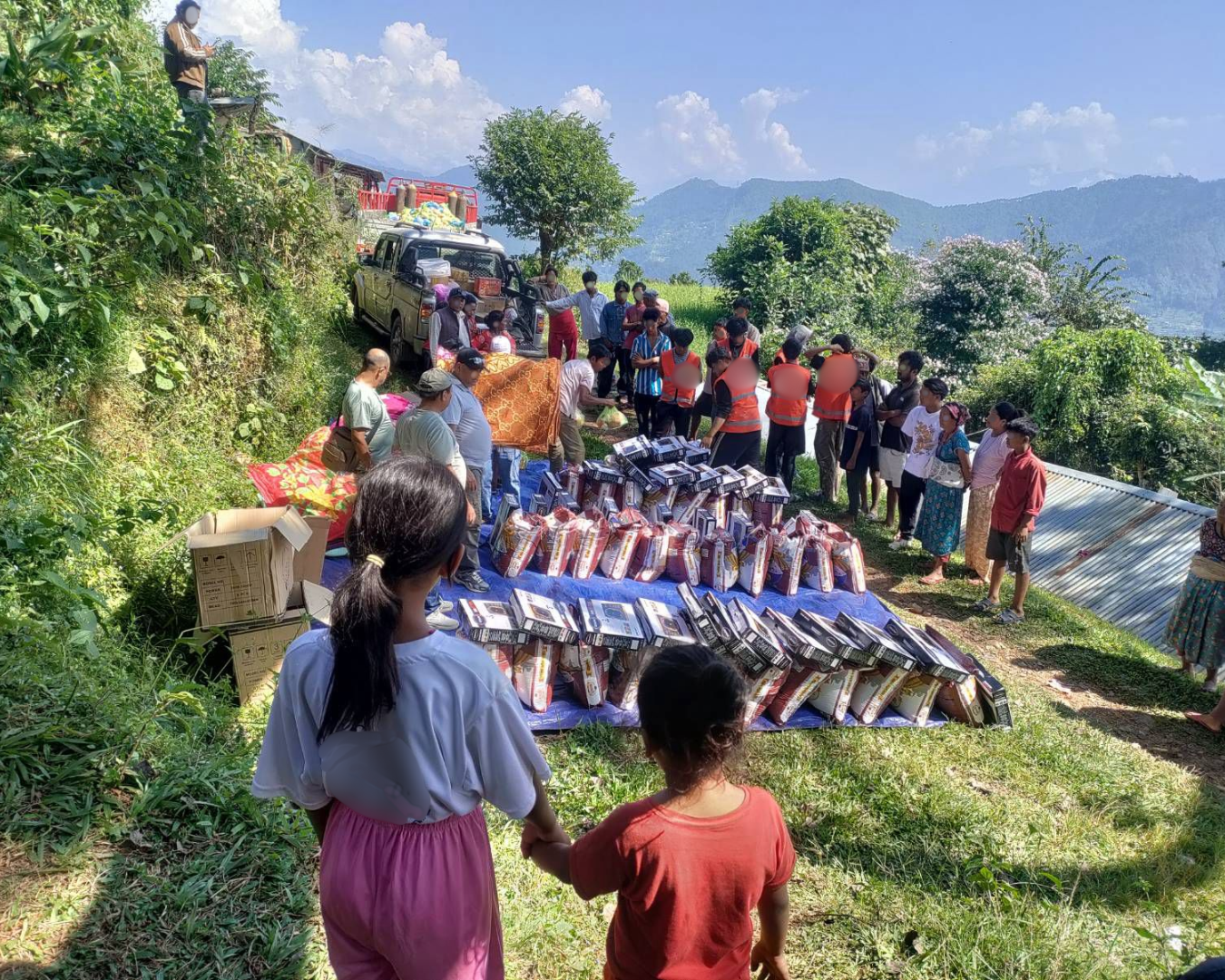
Local pastors have organized several distributions, reaching families who lost their homes and people whose livelihoods disappeared even when their homes survived.
Read the October field account ↓Water filters across several distributions
425 filters were distributed through other relief efforts, separately from the 75 filters included in the October household-relief round. The relief team has since received 200 more filters for a planned distribution in Gorkha.
The first journey
On the September trip, the team distributed 100 filters, along with food and electrolytes for 500 people. Volunteers also taught recipients how to use the filters.
Medical care planned for November
A local team plans to travel to the flood-affected area November 12–16 for a medical camp.
Partner Updates
Select an entry to read the full account.
August 26, 2026“First of all their life matters”Emergency funds and the first priorities from local leaders.
As news of the flooding reached Harvest Bridge, Pastor Shalva and his wife Jandi*, our other country co-director, were gathering information from local leaders about their communities and the help they needed. They relayed what missionaries were hearing about local churches:
I just have come to know through some of the Tibetan missionaries that the thatched roof of three churches are completely washed away. Please pray for it.
With roads washed away and local markets closed, Shalva said the team would need to bring supplies from Kathmandu. Harvest Bridge sent an initial $3,000 for the team to use where it was most urgently needed. Asked what families needed first, Shalva wrote:
First of all their life matters, food water, and clothing. They lost everything and they have nothing except the clothes they are wearing. Then helping them to a settlement, maybe government will help them in this part.
Six days after the floodFamilies waiting for news of loved onesShalva visits a flood-affected community.
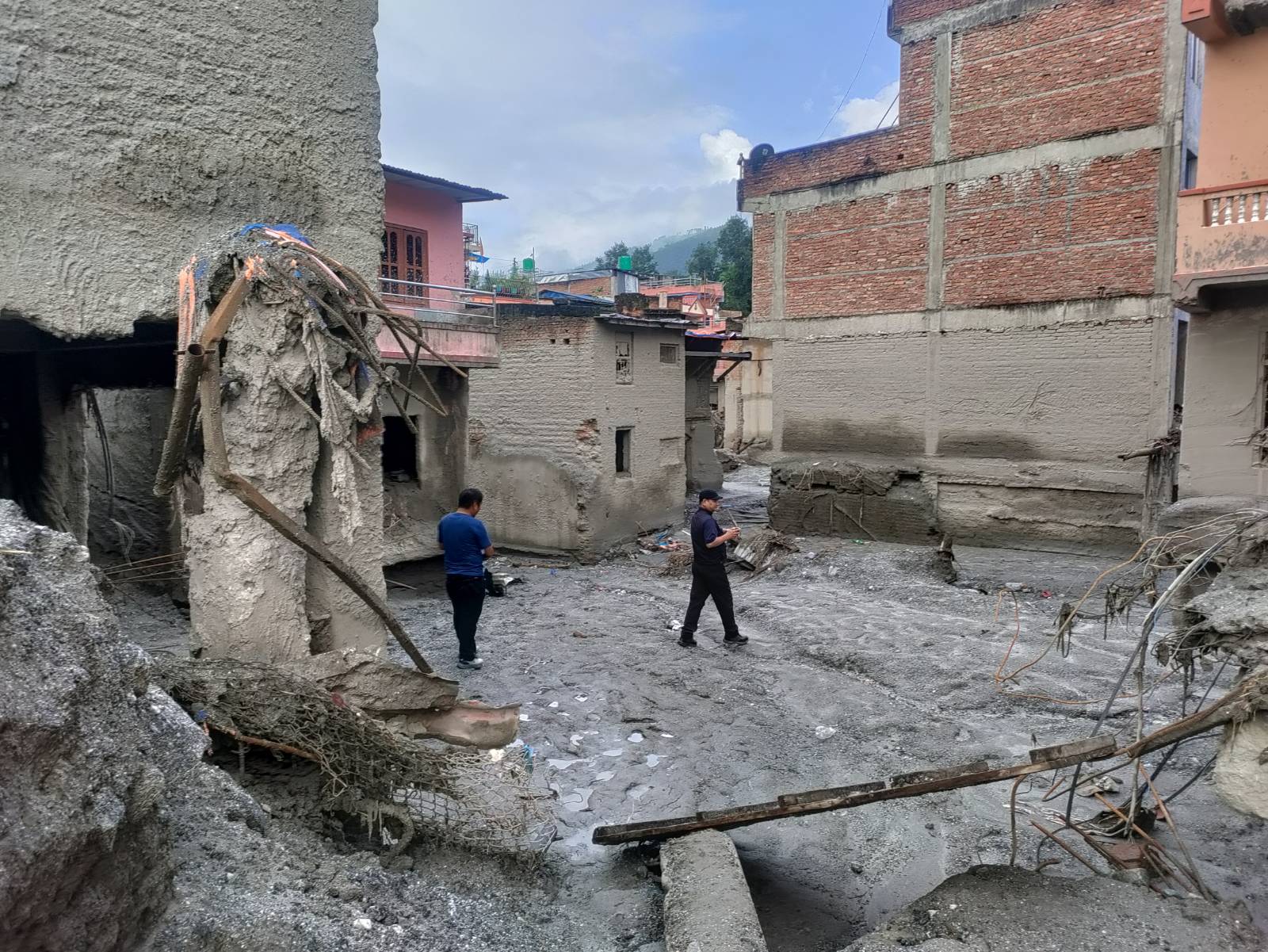
Shalva and a team of volunteers visited a town devastated by the flood. He met with a local pastor and heard eyewitness accounts of what had happened to the churches and the wider community. He wrote:
The destruction is beyond what words can describe. Families are grieving, communities are broken, and many are still waiting and praying for their loved ones to be found.
September 7–8, 2026Clean water, food and electrolytesThe first distribution and a difficult journey into the affected area.
Wine To Water supplied the first 100 water filters and trained five volunteers to distribute them and explain their use. The team travelled to the affected area, returning on September 8. Asked what had been distributed, they reported:
100 Pieces of filter and food and electrolytes for 500 people.
While travelling on September 7, Shalva asked the team to continue praying:
We are still on the way and it will take another 3 hours to reach. The road is very bad and raining. Please continue to pray for us.
In a subsequent update, he confirmed that recipients were taught how to use the filters and received buckets with them.
As he shared photos and videos from the distribution, he asked for prayer for the people affected and the churches serving them:
These pictures and videos speak more than I explain. It is more than a natural disaster and I have no words to speak more about it. Please kindly pray for the flood victims and the Churches who are earnestly showing the love of Christ.
September–October 2026Reaching people whose water sources and livelihoods were lostFurther distributions, damaged roads and the need as families resettle.
After the first distribution, local pastors reported continued demand for filters. Most communities were beyond damaged roads, with supplies needing to be carried on foot. The pastor also described families whose homes had survived but whose jobs, markets and access to essentials were gone.
When last time we distributed, people were in need of more filters but we had only 100 pieces. It is not easily available in Nepal but it is a very good item for flood victims because their all natural water springs are mostly damaged and its demand is going up and until now people are in holding centers but slowly they are trying to resettle down in different places. After that nobody will supply the relief that's why we are waiting until that time. Where as the matter of filter, we will give it to the villagers who are directly not affected due to flood but their means of livelihood is gone so those people are in real need. They can't travel and buy necessary things because there is no road. So providing filters will help them to stay free from water borne diseases .
By the October 28 report, 425 filters had been distributed through other relief distributions, separate from the 75 filters included in the October household-relief project.
Week of October 12, 2026Household relief for 250 families and groups of individualsHow local pastors identified families, what they provided and why.
Several partner organizations helped fund this distribution, joined by local supporters in Nepal in making this work possible. A joint effort involving about ten pastors and volunteers experienced in disaster relief provided food, bedding, kitchen utensils, cooking equipment, emergency torches, basic medicines and 75 shared water filters. The report puts the reach of this round at more than 1,250 people.
How local pastors identified families
Before the trip, Shalva explained how local pastors were identifying families—including people grieving lost relatives and people whose livelihoods had disappeared:
You know, most vulnerable families are getting red card [from the government]. It means they need everything. They have nothing except the one pair of clothes they are wearing. So everything has been taken away by the flood. Those who are getting the red card, there are only one member or two members left in the family. All others are gone. Their property is gone, house is gone, their everything is gone. And if they have any money in the bank, that way they will get, but there is no any certainty that they have money in the bank. You know, nothing they have in their hand. Even Nepali citizenship [proof] they don't have because they lost it. So those people got the red card.
Others who lost the family members, maybe 50% family members, those kind of people are getting yellow card. So government is distributing three kinds of cards, and the other one is some people need only shelter because their house is dumped on by flood, but still they can dig out and get some of the things, and maybe one member of the family was lost. But the thing is that the government will give the house, but how will they will eat, what will they wear, how will they cook? You know, nothing is there. And those who are in the hard villages - those who have not directly had damage by the flood - but their employment is gone, their market is gone. Their laboring place is gone, and they have no skill. They have no education, and they have no land to cultivate. You know those kind of poor families are there. They were getting porter's job previously, but now no job. You know nobody will hire them to, you know, carry anything because no more porters are there, because no market, everything is taken away. Their hotel [where they worked] is gone. Everything is gone, and they are on the street now.
They have some clothes, but they have nothing to earn or any place to go. So those people also are starving. So taking relief to those people is very difficult. So there is no road. That's why we are targeting those kind of poor families. So that's why we are waiting for the road to clear and somehow we will go there. Taking relief items also, it's not easy. We have to take in the truck, and truck will not go there. We have to hire a tractor in some places. It's really a tough job. But through the local pastors we have surveyed and we have listed who we will give these items. We will not go there on our own without knowing who needs relief and who doesn't need relief and who is a victim and who is not victim, we can't you know easily find out. That's why the pastors over there we are partnering with them and those pastors are really really helping us. They are trying to find the direct victims, they are trying to find the indirect victims. They are trying to find the who lost everything and has nothing and where to go.
The distribution and return journey
After returning, he described what they provided and why they adapted the supplies to families’ circumstances:
We were able to support a total of 250 families of flash flood victims who lost everything except the clothes they were wearing. Apart from that, they lost their family members - fathers, mothers and children too. Please remember them in your prayers. It is very very tiresome. It is so much sacrifice. But we could see the smiles in the faces of the people. Those people who we support, actually they lost everything. They have nothing. Still, they are smiling when they see us. That’s the beauty of the relief work.
We have a Christian community in Kathmandu, so some 10 pastors, as a joint venture, all together we were able to support 250 families. Many items – what I listed – kitchen utensils, bedding, dry food items - and we added an emergency torch. Because sometimes they have no electricity over there. Then we, instead of giving gas stove, we give electric induction stove, because where will they find the gas cylinder? And they have no money for gas cylinder. Even though it is expensive, you know, our budget went a little bit off. But we thought that it is worthy to give them. Otherwise, they won't be cooking anything. Some of the medicines we took, like easy medication - oral rehydration packets and paracetamol. And 75 water filters for even more families to share.
Finally I returned back to Kathmandu after a few days of hectic, troublesome, tried journey. However it was a joyful moment too because we can see smiles in the face of those victims of global warming’s disastrous flash flood from Himalayas. Thank you so much for prayer and support which enabled us to help flash flood victims.
Water filters for Gorkha and a medical campFilters have arrived for a planned distribution, and the medical team plans to travel November 12–16.
Water filters and buckets for Gorkha
By November 9, the filters had arrived. Shalva explained how the team planned to use them:
We have received 200 packs of drop filters. Thank you so much. It will be given to flash flood victims of Gorkha District' where water is very unclean. We will provide them with buckets so that they can drink clean bacteria free water. Thank you so much for all your support.
Medical camp trip planned for November 12–16
Jandi reported on November 9 that her medical team plans to leave for a flood-affected area on November 12 and return November 16. Please pray for the team as they prepare to offer medical care.
The needs continue as families resettle
People have lost the places where they worked, the markets they depended on and the means to earn a living. Clean water, household essentials and medical care are part of a longer recovery.
Please continue praying for families rebuilding their lives and for the local leaders discerning how best to help.
Support the Nepal responsePray with our partners
- For families grieving loved ones and facing the work of rebuilding their lives.
- For people without clean water, secure shelter or a way to earn a living.
- For local pastors and volunteers identifying needs and travelling through damaged areas.
- For wisdom and safe access as the medical team prepares for the next stage of care.
*Name changed for security.